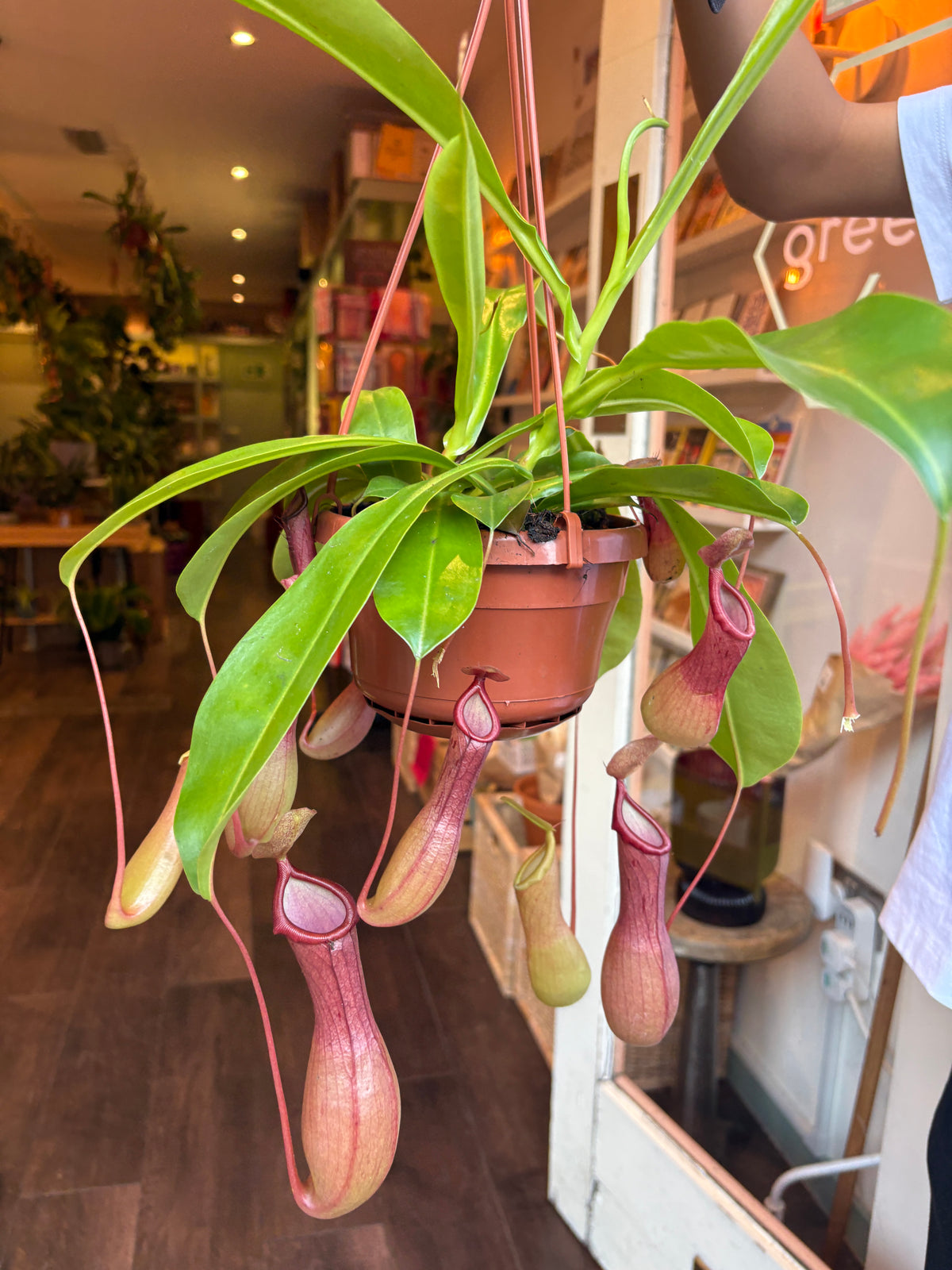


Nepenthes × ventrata
Nepenthes × ventrata
Couldn't load pickup availability
Nepenthes × ventrata is a fascinating tropical pitcher plant, known for her long, elegant pitchers that hang from the ends of her leaves and gradually develop their own colouring. She’s a hybrid of Nepenthes alata and Nepenthes ventricosa and makes a brilliant choice if you want something a little different from the usual houseplant. Give her the right conditions and she can keep producing new pitchers throughout the growing season.
☀️ Light - Bright, indirect light is best. She can enjoy some gentle morning or evening sunshine, but avoid strong midday sun through glass, which can scorch the leaves and pitchers. Good light is particularly important for encouraging new pitchers and maintaining their colour.
💧 Watering - Keep the compost consistently moist, but never waterlogged. Use rainwater, distilled water or another low-mineral water, as Nepenthes are sensitive to the minerals found in tap water. Water when the surface of the compost is just beginning to dry, allowing excess water to drain away.
Unlike some other carnivorous plants, Nepenthes shouldn't be left sitting in a tray of water. Avoid letting the compost completely dry out, as this can quickly cause stress.
🌡️ Temperature & Humidity - She enjoys warm, humid conditions. Aim for around 18-28°C during the day and avoid prolonged exposure to temperatures below about 12-15°C. Higher humidity will help encourage pitcher production, particularly during dry winter months. Keep her away from radiators, heaters and cold draughts.
🪴 Potting - Use a specialist carnivorous plant mix that is loose, acidic and very free draining. A mix based around sphagnum moss, perlite and orchid bark works well. Avoid standard houseplant compost and fertilisers, which can be too rich for her roots.
✂️ Pruning - Remove completely brown or dead pitchers and leaves with clean scissors. Old pitchers naturally deteriorate over time, so don't worry if she loses some as new ones develop.
🌿 Growing Tips - The pitchers are designed to catch insects, which the plant uses as an extra source of nutrients. There's no need to feed her if she has access to the occasional small insect, and avoid feeding her meat or other human food.
If she stops producing pitchers, don't panic. Changes in light, humidity or watering can cause her to pause while she adjusts. Give her stable conditions, plenty of bright filtered light and patience.
🐾 Pet Friendly - Nepenthes × ventrata is generally considered non-toxic to cats and dogs, making her a fun carnivorous plant for pet-friendly homes.
Size: 15cm nursery pot
Share